
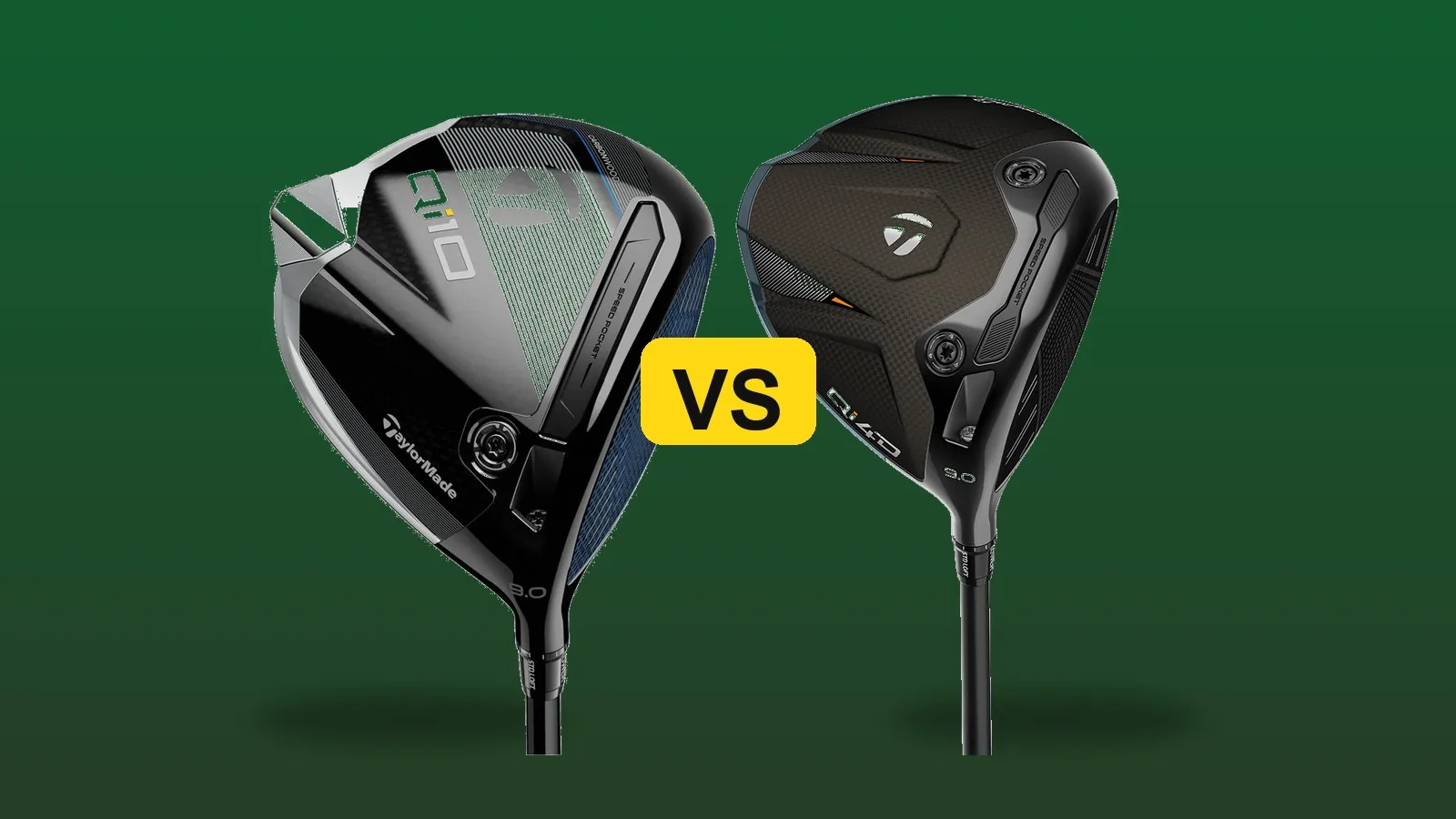
Quick verdict
Buy the Qi4D if you are shopping for a new TaylorMade driver. The 460cc head, the Speed Pocket, and the REAX shaft system are the current fitting. Keep a Qi10 that is already fitted. The same review calls the gain a refinement, and Scottie Scheffler tested a newer head and stayed with the Qi10.
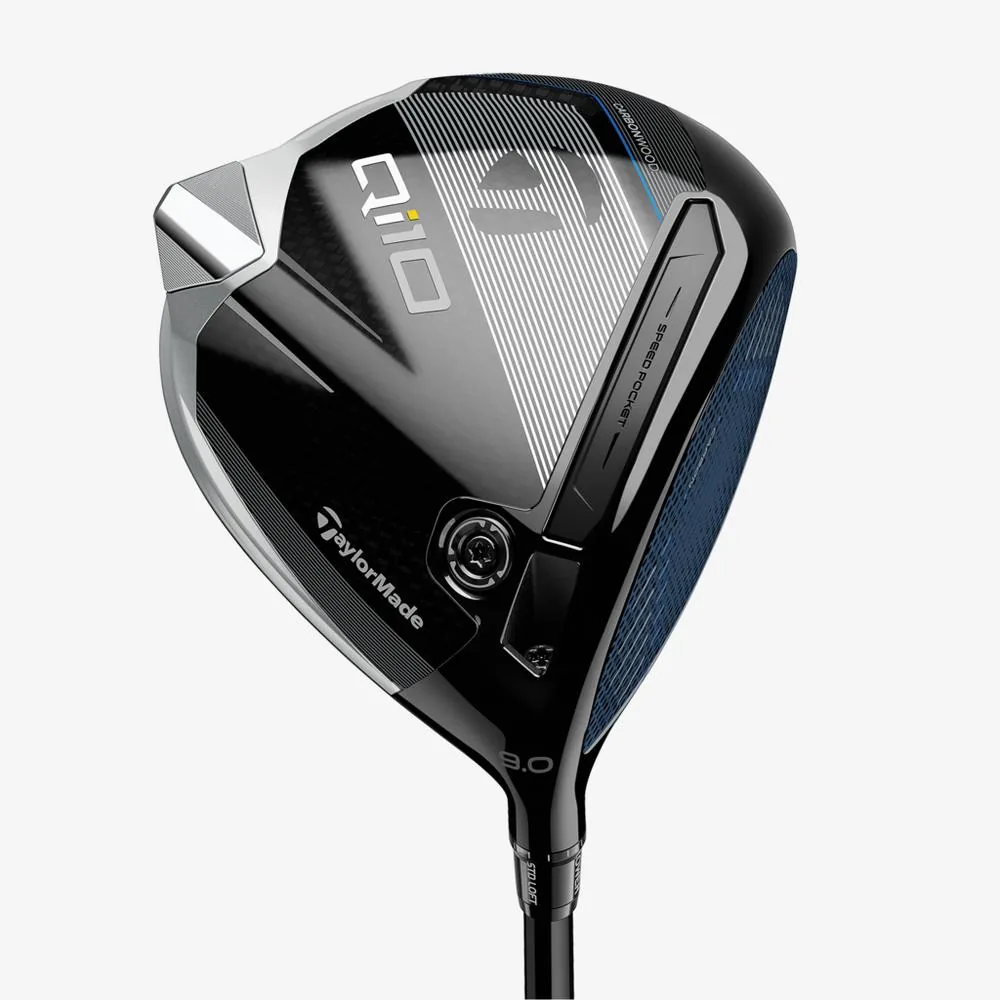
TaylorMade Qi10
- Year: 2024, replaced January 2026
- Face: 3rd-gen 60X Carbon Twist Face
- Crown: Infinity Carbon, 97% of the surface
- MOI: Up to 10,000 g/cm² on the Max
- Loft sleeve: ±2°
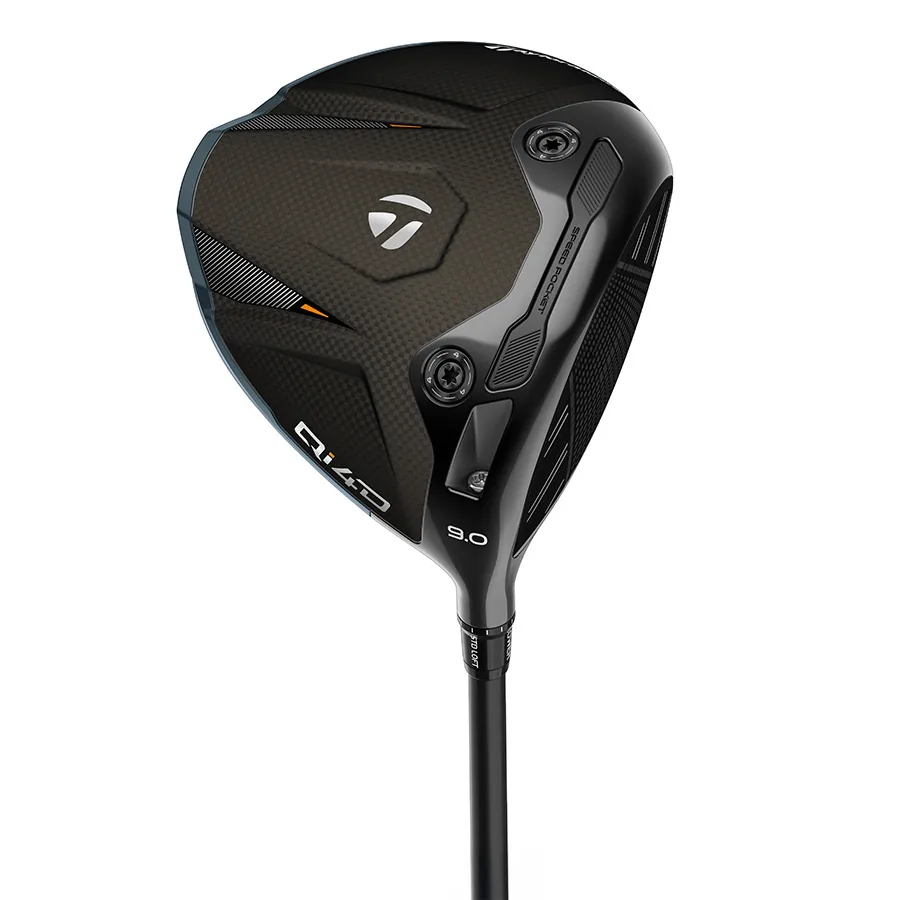
TaylorMade Qi4D
- Head: 460cc
- Lofts: 9°, 10.5°, 12°
- Face: 60X Carbon, new roll radius
- Weights: 9g and 4g, four setups
Spec comparison
| Spec | Qi10 | Qi4D |
|---|---|---|
| Status | 2024 flagship, replaced January 2026 | Current family: Qi4D, LS, Max, Max Lite |
| Face | Third-generation 60X Carbon Twist Face | 60X Carbon TwistFace with a reengineered roll radius |
| Where the mass went | Infinity Carbon Crown covers 97% of the surface, so weight can sit at the perimeter | Same carbon-face idea, plus a Speed Pocket tuned for low-face strikes |
| Stability number | Up to 10,000 g/cm² combined MOI on the Qi10 Max | No new MOI headline on the standard head |
| Head | Balanced standard, compact LS, max-MOI Max | 460cc standard head |
| Loft | Stock 8°–12°, sleeve moves loft 2° either way | 9°, 10.5°, 12°, with a 4° loft sleeve |
| Weighting | Sliding heel-toe track on the LS and Max | Two-port Trajectory Adjustment System, 9g and 4g |
| Shaft | Conventional flex fitting | REAX Red, Blue, or White, built with Mitsubishi Chemical |
The face is the part that changed the ball
A carbon face is lighter than titanium. That is the whole engineering case on both reviews: the grams you do not spend on the face can move to the perimeter, which is the only place added mass raises MOI and keeps an off-center strike from twisting the head open or closed. On the Qi10, the Infinity Carbon Crown is what made the move possible. Pushing carbon to 97 percent of the surface freed weight that older crowns still held in the structure itself. The Max is the head that spent that weight on the 10,000 g/cm² figure. The standard Qi10 is the balanced head. The Qi10 LS spends some of the same budget on a smaller, lower-spin shape.
The Qi4D keeps that carbon face and changes the vertical curvature. The reengineered roll radius is there to tighten spin when the strike is high or low on the face, not to invent a new material. The redesigned Speed Pocket is more specific than a generic forgiveness claim. It is tuned to hold ball speed and cut spin on low-face contact, which is the miss most recreational players actually make. A toe slice and a thin shot are different problems. The Speed Pocket addresses the thin shot.
The fitting system is the other real change
The Qi10 sleeve is the familiar one: 2 degrees up or down from the stock loft, with a sliding weight on the LS and Max for heel-to-toe bias. The Qi4D sleeve is listed as 4 degrees, and the two trailing-edge weights (9g and 4g) are specified as four setups: stock forgiveness, max distance, fade bias, or draw bias. That is shot-shape hardware, not a cosmetics track.
REAX is the part a spec sheet usually hides. TaylorMade built it with Mitsubishi Chemical from more than 11 million driver swings, then sorted players by how fast the clubhead is rotating through impact, not by the words stiff, regular, and senior. Red, Blue, and White are rotation profiles. A golfer who buys the head and keeps a random shaft has bought the face and skipped the fitting axis the review says the club is built around.
How large the upgrade is
The Qi4D review's testing note is close to 2 mph of ball speed and roughly 7 yards of carry versus the Qi10. That is a real gain. It is also small next to a bad loft or a shaft the player cannot load. The Qi10 review scores the generation gap the same way: Qi4D's changes are refinements, the architecture is carbon face plus carbon crown plus perimeter weight, and a fitted Qi10 gives up little performance. Scheffler's bag is the public version of that result. A staff player tried the newer model and kept the Qi10. Nelly Korda went the other way, from a Qi10 Max to a Qi4D. Both can be true. One player already had the flight. The other wanted the current head.
Qi10 pros and cons
Pros
- MOI that was class-leading in 2024 and is still high
- Third-generation carbon face over the original Stealth
- Standard, LS, and Max cover three different misses
- Still the head a fitted player can keep
Cons
- Not the current flagship, so new stock is thinning
- The Qi4D review records a real, if small, ball-speed gain
- The 10,000 g/cm² figure belongs to the Max, not every Qi10
Qi4D pros and cons
Pros
- About 2 mph of ball speed and 7 yards of carry versus the Qi10
- Speed Pocket built for low-face strikes
- 9g and 4g weights: stock, distance, fade, or draw
- REAX shafts sorted by rotation rate, not a flex sticker
Cons
- The LS is a different head if you need lower spin
- The REAX system is wasted if the shaft is a guess
- The standard head is not the low-spin pear
Who should buy which
| You | Buy |
|---|---|
| Already fitted into a Qi10 and the miss is acceptable | Keep the Qi10 |
| Shopping now, miss is off center or low on the face | Qi4D |
| Centered strikes balloon and you want a smaller head | Qi4D LS, not this head |
Final verdict
Shop the Qi4D when you do not already own a fitted Qi10. The carbon face, the Speed Pocket, and a REAX shaft matched to your rotation are the 2026 package. Hold the Qi10 when that work is already done. Seven yards does not pay for a new loft and a new shaft that have not been fit.
Check Qi4D Price Check Qi10 PriceFull write-ups: Qi10 review and Qi4D review. The year map is TaylorMade drivers by series.