
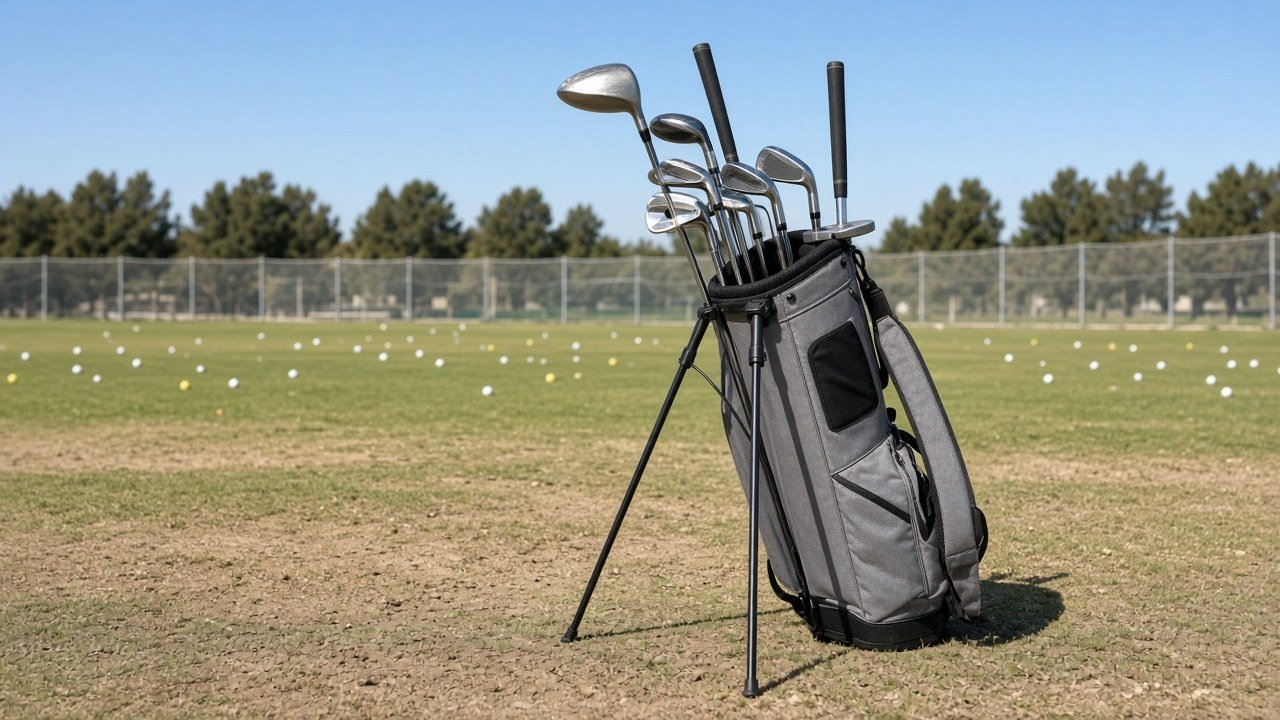
Our 9-club starter bag
Takeaway: Every club in a starter bag should have a clear job you will use every round.
| Club | Job | Beginner spec to look for |
|---|---|---|
| Driver | Tee shots on long holes | 10.5°–12° loft, 460cc head, flex matched to your speed |
| Fairway wood or hybrid (pick one) | Long second shots, tee shots on tight holes | 5-wood (around 18–19°) or a 4-hybrid (around 22–23°) |
| 6-iron, 7-iron, 8-iron, 9-iron | Approach shots from roughly mid-range in | Game-improvement or "max" cavity-back irons |
| Pitching wedge | Short approaches and longer chips | Usually matches the iron set |
| Sand wedge | Bunkers and short pitches | Around 54°–56° with mid or high bounce |
| Putter | On and around the green | Whatever you roll straightest; mallets are more forgiving |
Example lofts above come from one current game-improvement family, PING's G440 range: fairway woods from 15° to 24°, hybrids from 17° to 34°, and irons with a 29° 7-iron. Other brands sit close to these numbers.
Clubs to skip in year one
Takeaway: Long irons, a lob wedge and a 3-wood cost money and strokes before they help.
- 3- and 4-irons: hard to launch at beginner speeds. A hybrid of similar loft is easier (see hybrid vs iron).
- 3-wood: low loft off the ground is tough. A 5-wood or 7-wood is friendlier.
- Lob wedge (58°–60°): high-loft shots punish thin and fat contact. Learn with the sand wedge first.
- A second putter, a driving iron, a "chipper": nice to try, not needed.
Driver: the club most worth getting right
Beginners usually swing slower than they think and hit down on the ball, so a higher loft helps launch and reduces sidespin. Our driver loft guide gives starting lofts by swing speed, and the shaft flex guide explains why most club golfers fit Regular rather than Stiff. If you are shopping on a budget, start with our budget golf drivers list or a recent used model from the used driver value guide.
Box set vs building your own
| Complete box set | Build your own (new or used) | |
|---|---|---|
| Cost | One price for everything, often including a bag | Spread over time; used clubs stretch the budget |
| Fit | Standard length, usually one flex | Choose length, flex and loft per club |
| Quality | Fine for the first year or two | Can pick better heads where it matters (driver, putter) |
| Best for | Not sure you will keep playing | Committed, or taller/shorter than average |
If you are much taller or shorter than average, check your lengths with the club length calculator before buying any set.
Buy in this order
Takeaway: Spend first on the clubs you use most: putter, wedges, then driver.
- Putter — used on almost every hole, often more than once.
- 7-iron, 9-iron, pitching wedge and sand wedge — enough for a par-3 course or range sessions.
- Hybrid or fairway wood — for longer holes.
- Driver — once you can make steady contact with the hybrid.
- 6- and 8-iron — to fill gaps once you know your distances (see build your yardage chart).
Balls, tees and the rest
Use a soft, low-cost two-piece ball while you are losing several a round; our best golf balls for beginners lists current options, and ball compression explained covers why "soft" matters. Add a glove (see which hand a golf glove goes on), a few tees and a pitch-mark repair tool.
A sensible budget split (our suggestion)
Takeaway: Put the money where the shots are: on and around the green.
This is our own rule of thumb for a first bag, not market data. Adjust it if you already own some clubs.
| Part of the bag | Share of budget | Why |
|---|---|---|
| Putter | About 15% | Used on nearly every hole; feel and alignment matter |
| Irons and wedges | About 40% | Most of your full swings and all your short-game shots |
| Driver | About 25% | Biggest effect on penalties when fitted for loft and flex |
| Hybrid or fairway wood | About 10% | One good club covers many long shots |
| Bag, balls, glove, tees | About 10% | Low-cost items; balls get lost quickly at first |
A recent used driver or a used iron set can stretch every line of this table. Check the head for cracks, the shaft flex and the grip before buying; our new-vs-used guide covers the checks in detail (used golf clubs for beginners).
Starter bag checklist
- Driver 10.5°+ (Regular or lighter flex unless you know your speed)
- One of: 5-wood, 7-wood or 4-hybrid
- Irons 6–9 and pitching wedge
- Sand wedge, 54°–56°
- Putter at a length you can stand comfortably over
- Two-piece balls, tees, glove, ball marker, pitch-mark tool
Common beginner mistakes
- Copying a tour bag. Pros carry low-loft drivers and blade irons because they swing much faster; our Tour Bag Index shows what they use, and the point is to see the gap, not copy it.
- Buying Stiff shafts "to grow into". A too-stiff shaft lowers launch and feel.
- Carrying 14 clubs because you can. Extra clubs add weight and indecision.
- Spending most of the budget on the driver and using a worn-out putter.
- Ignoring wedge bounce. A very low-bounce sand wedge digs in soft bunkers (see golf wedges explained).
Frequently asked questions
How many golf clubs does a beginner need?
About seven to ten. A driver, one fairway wood or hybrid, four irons (6–9), a pitching wedge, a sand wedge and a putter make a good nine-club bag.
Should a beginner buy a full set of golf clubs?
Not necessarily. A half set or a nine-club bag covers every shot a beginner needs and costs less.
What driver loft should a beginner use?
Usually 10.5° or higher. More loft helps slower swings launch the ball and reduces sidespin.
Is a box set good for beginners?
Yes, if you are not sure you will keep playing. Upgrade the putter or driver later if needed.
What is the maximum number of clubs allowed?
Fourteen, under Rule 4.1b of the Rules of Golf.