Golf 101: The Beginner's Guide to Rules, Gear and Skills

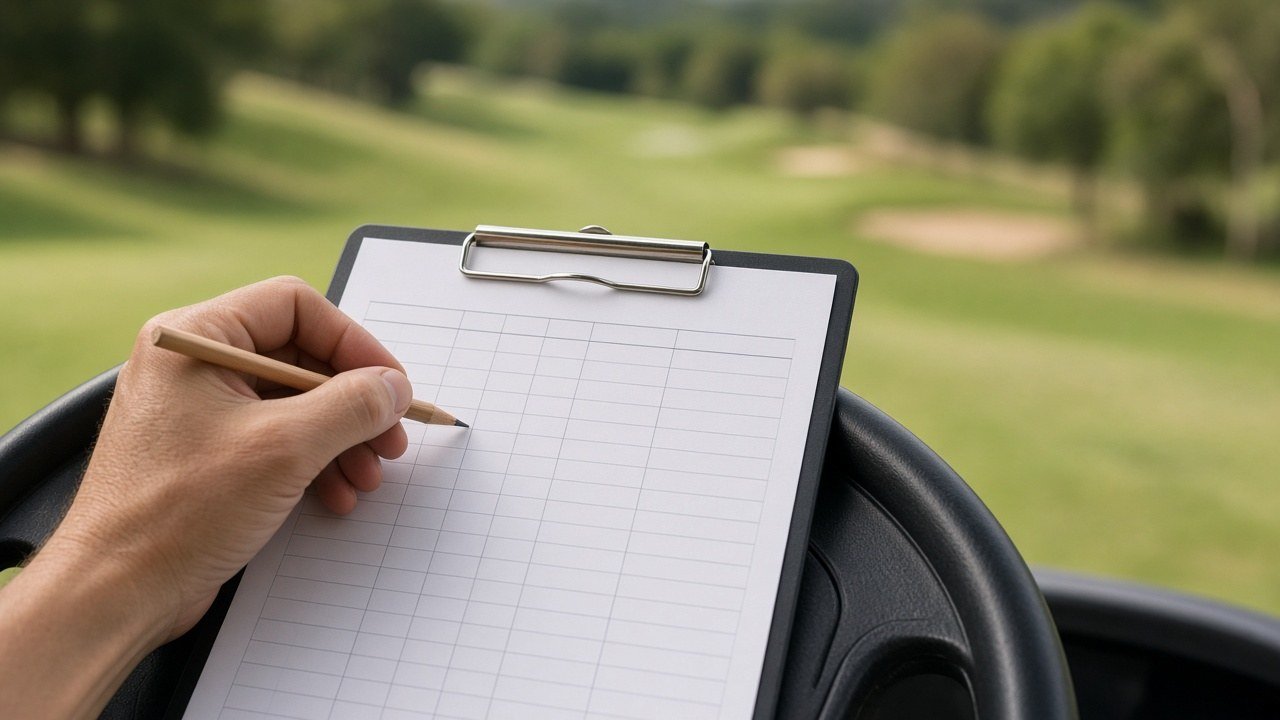
Blank golf scorecard and pencil on a wooden bench beside a golf course
Golf 101 starts here: rules, gear and skills for new golfers.
Quick answer: Golf 101 is Winner Golf Gear's beginner library: 30 guides plus our handicap explainer, grouped into rules and scoring, equipment, skills and course basics. Every rules answer names the rule number, and every gear answer links to our specs and tour data.

Start here: a four-step beginner path

Takeaway: Learn in the order you will need things on the course: rules and scoring, then gear, then the swing, then the course itself.

StepReadYou will be able to…
1. Before your first roundBasic rules, etiquette, keeping scorePlay a round without holding anyone up or breaking a rule by accident
2. Before you buy anythingClubs a beginner needs, new vs used, ball compressionBuild a 7–10 club bag without overspending
3. At the rangeGrip, stance and ball position, swing basicsPractise with a plan instead of hitting balls at random
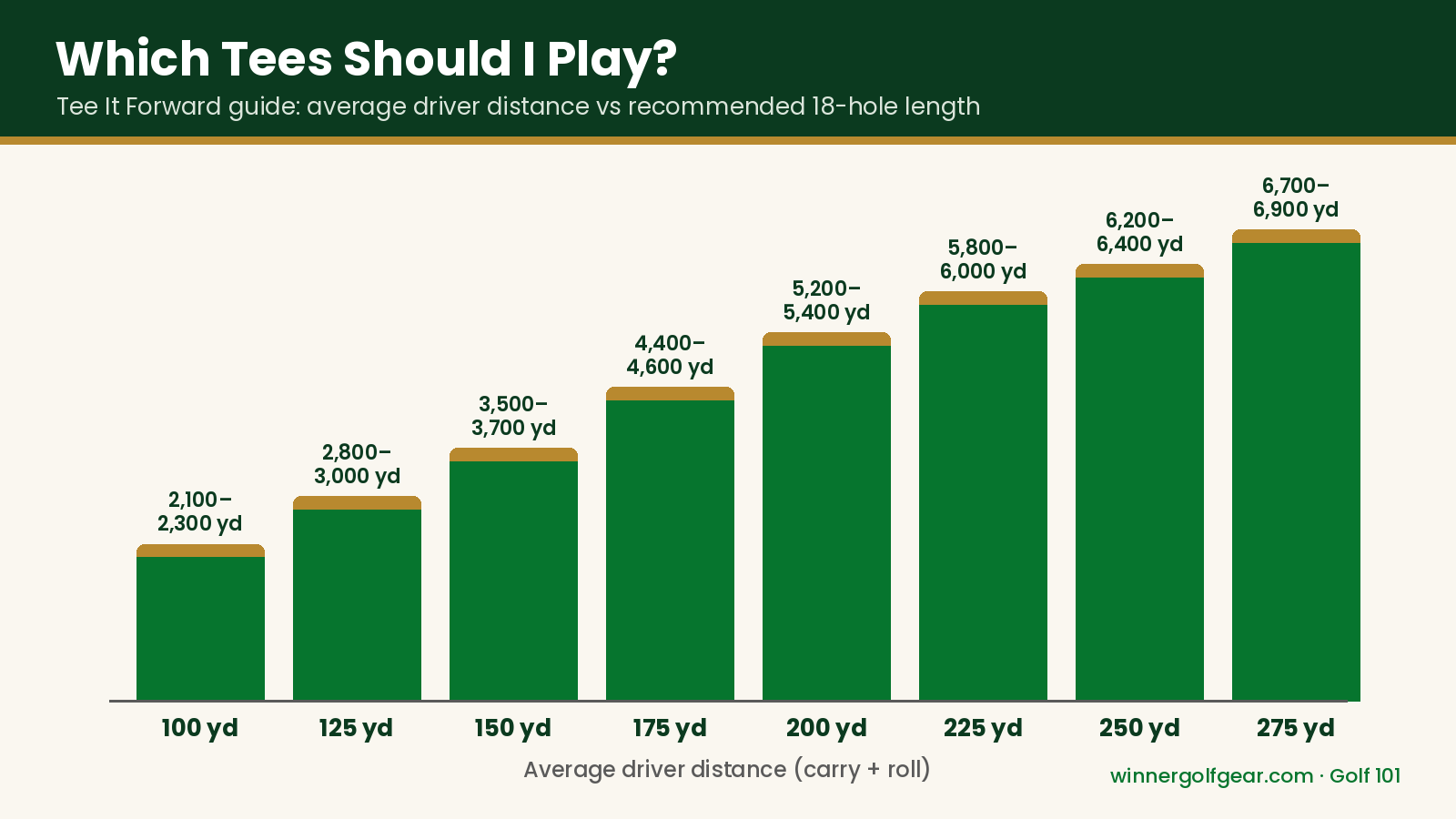
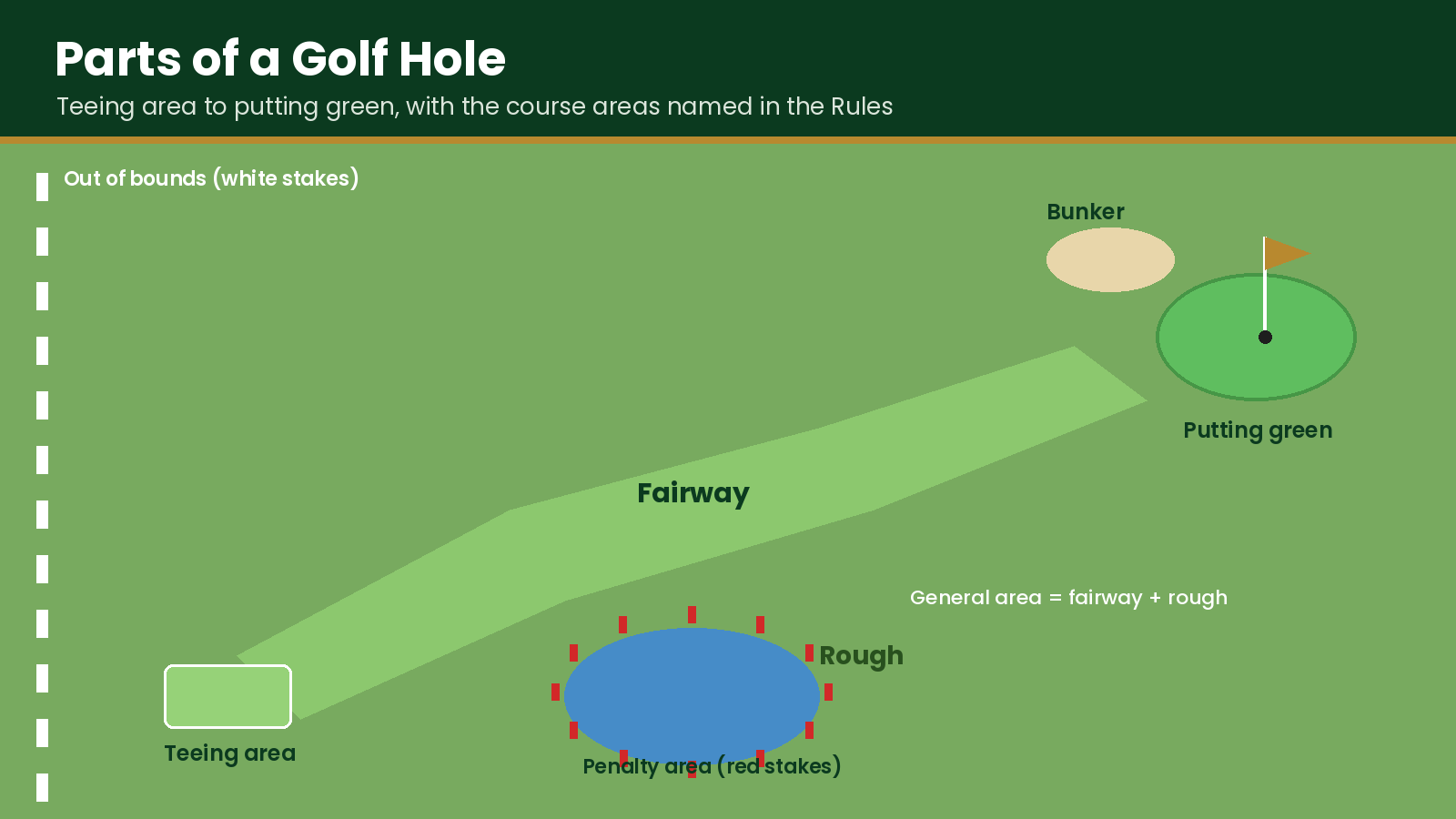
4. On the courseWhich tees, parts of a course, your yardage chartChoose tees and clubs that match how far you actually hit

How Golf 101 connects to the rest of Winner Golf Gear

Winner Golf Gear tracks what tour players carry and translates it for everyday golfers. Golf 101 is the starting layer: it explains the terms (loft, flex, compression, bounce) that our Tour Bag Index, golf drivers guide and golf balls guide use, so you can read a pro's bag and know which parts apply to you.

Rules, scoring and etiquette

Golf Scoring Terms Explained: Par, Birdie, Bogey, Eagle and More
Golf Scoring Terms Explained: Par, Birdie, Bogey, Eagle and MoreEvery golf score is named by how it compares to par, the number of strokes a skilled player is expected to need.
How to Keep Score in Golf: Scorecard Walkthrough for Beginners
How to Keep Score in Golf: Scorecard Walkthrough for BeginnersCount every swing at the ball plus any penalty strokes, then write the total for each hole on the card.
Basic Golf Rules for Beginners: The 12 You Will Use Every Round
Basic Golf Rules for Beginners: The 12 You Will Use Every RoundYou only need about a dozen rules for a normal round: play the ball as it lies, tee off between the markers, carry no more than 14 clubs, search for three minutes, take stroke and distance for lost or out-of-bounds balls, know your penalty-area and unplayable options, and keep pace.
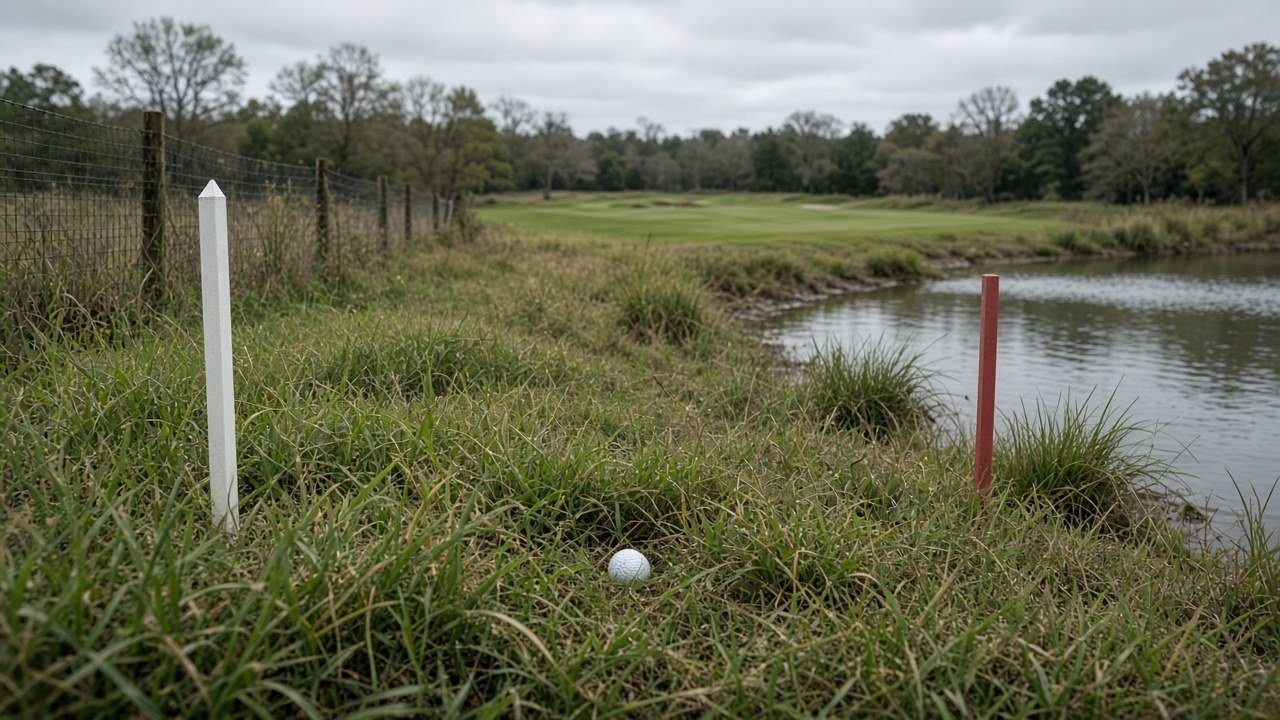
Out of Bounds vs Penalty Area: What White, Yellow and Red Stakes Mean
Out of Bounds vs Penalty Area: What White, Yellow and Red Stakes MeanWhite stakes or lines mark out of bounds: your only option is stroke and distance, one penalty stroke and replay from where you last hit.
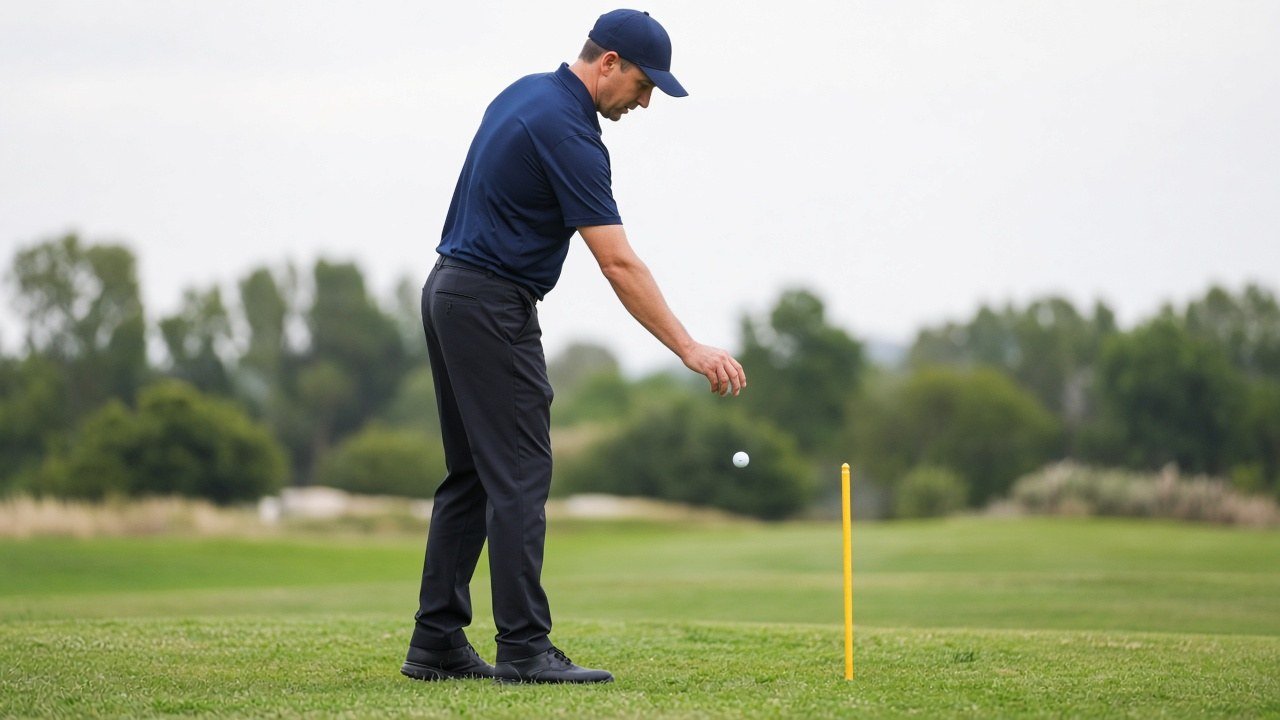
How to Take a Drop in Golf (Rule 14.3, Step by Step)
How to Take a Drop in Golf (Rule 14.3, Step by Step)Find your reference point, measure the relief area (one or two club-lengths with your longest club except the putter), then let the ball fall straight down from knee height so it lands in that area.
The Unplayable Lie Rule: How and When to Use It
The Unplayable Lie Rule: How and When to Use ItAnywhere except a penalty area, you may declare your ball unplayable and, for one penalty stroke, choose stroke and distance, back-on-the-line relief, or a drop within two club-lengths no nearer the hole.
Golf Formats Explained: Which One Should a Beginner Play?
Golf Formats Explained: Which One Should a Beginner Play?Stroke play counts every shot; match play counts holes won; Stableford awards points per hole so one bad hole only costs you zero points.
Golf Etiquette for Beginners: What to Do (and Not Do) on the Course
Golf Etiquette for Beginners: What to Do (and Not Do) on the CourseGolf etiquette comes down to three things: safety (shout "fore" and never hit into a group), pace (play ready golf; the Rules recommend no more than 40 seconds per stroke ) and course care (rake bunkers, repair pitch marks, replace divots).
What Is a Golf Handicap? How It Works
What Is a Golf Handicap? How It WorksScore Differentials, Course Handicap and the World Handicap System.

Equipment basics

What Golf Clubs Do Beginners Need? Build a 9-Club Starter Bag
What Golf Clubs Do Beginners Need? Build a 9-Club Starter BagA beginner needs about nine clubs, not fourteen: a high-loft driver (10.5° or more), a fairway wood or hybrid, a 6-, 7-, 8- and 9-iron, a pitching wedge, a sand wedge around 56° and a putter.
How Many Clubs Can You Carry in a Golf Bag? The 14-Club Rule
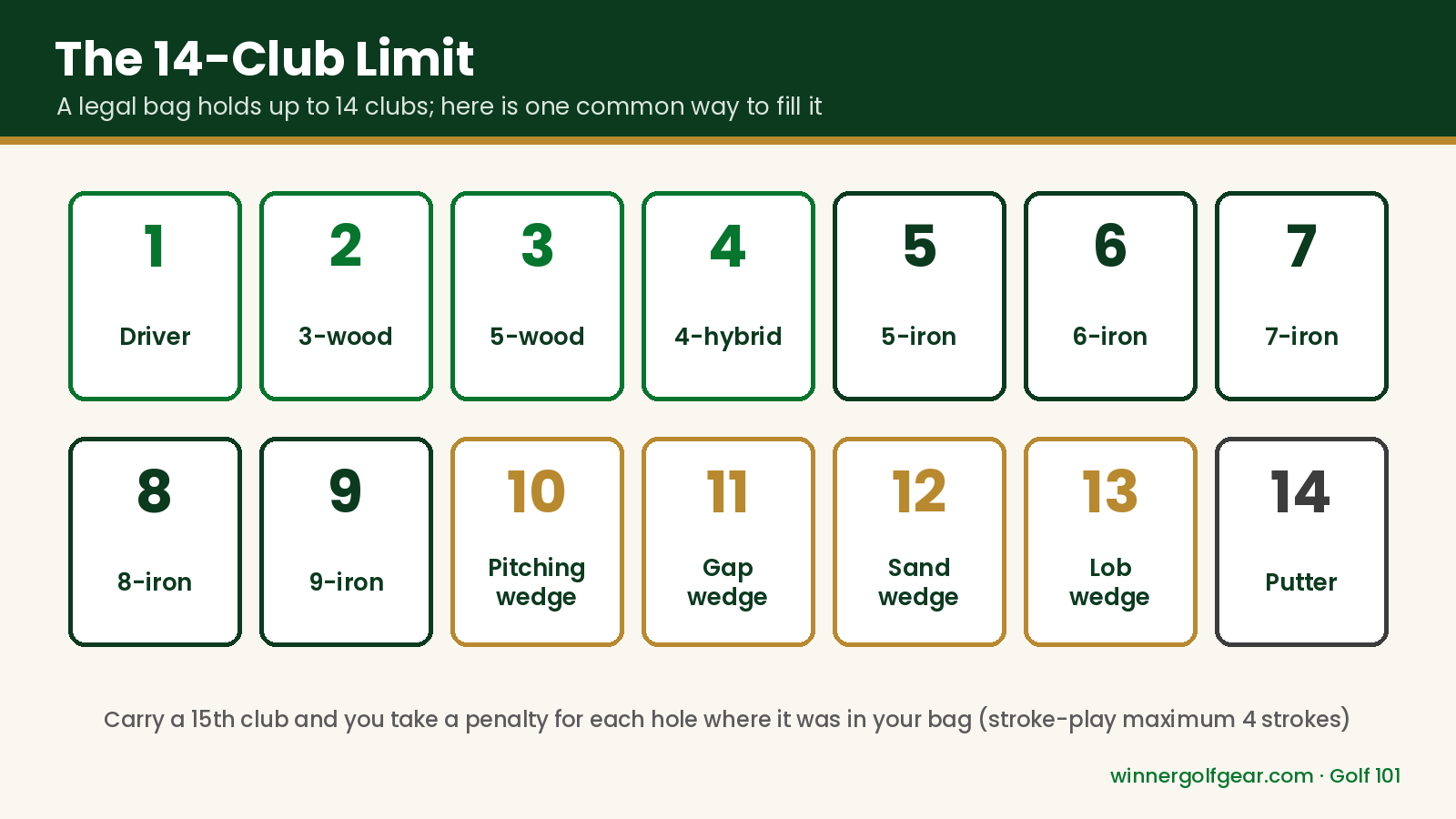
How Many Clubs Can You Carry in a Golf Bag? The 14-Club RuleYou may carry up to 14 clubs during a round (Rule 4.1b).
Types of Golf Clubs: Woods, Hybrids, Irons, Wedges and Putters
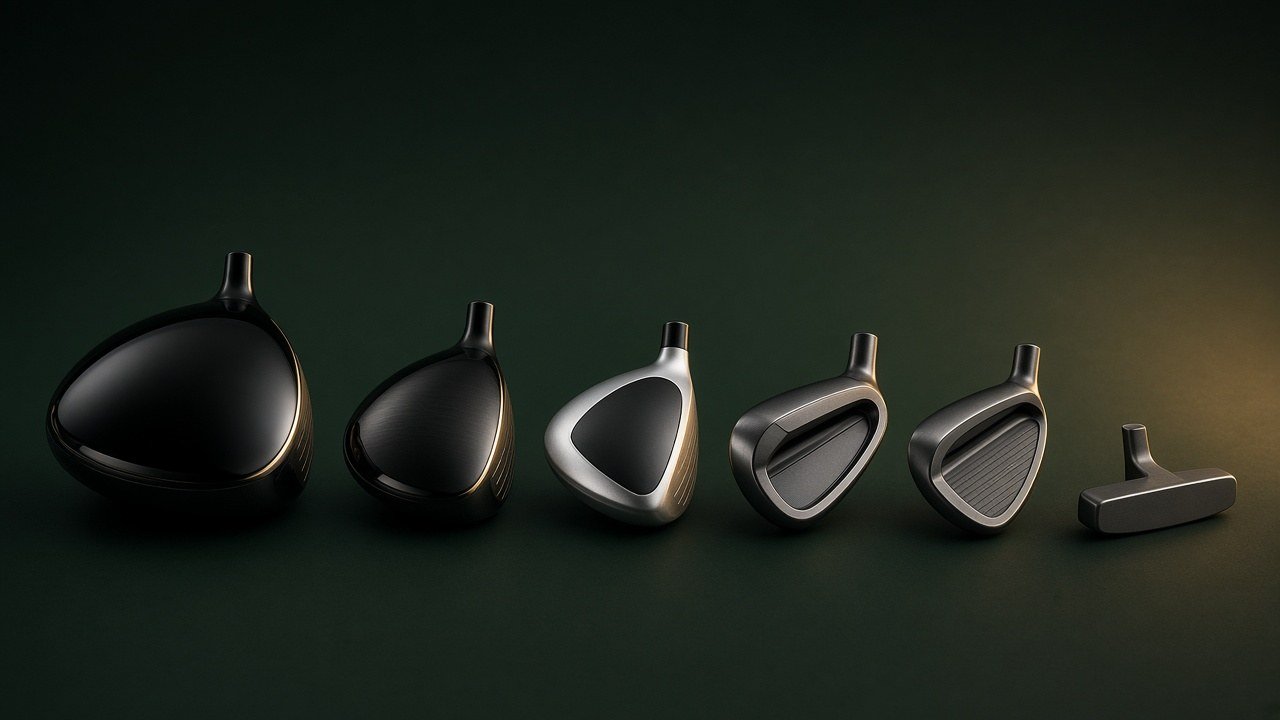
Types of Golf Clubs: Woods, Hybrids, Irons, Wedges and PuttersThere are five types of golf clubs: woods (driver and fairway woods), hybrids, irons, wedges and the putter.
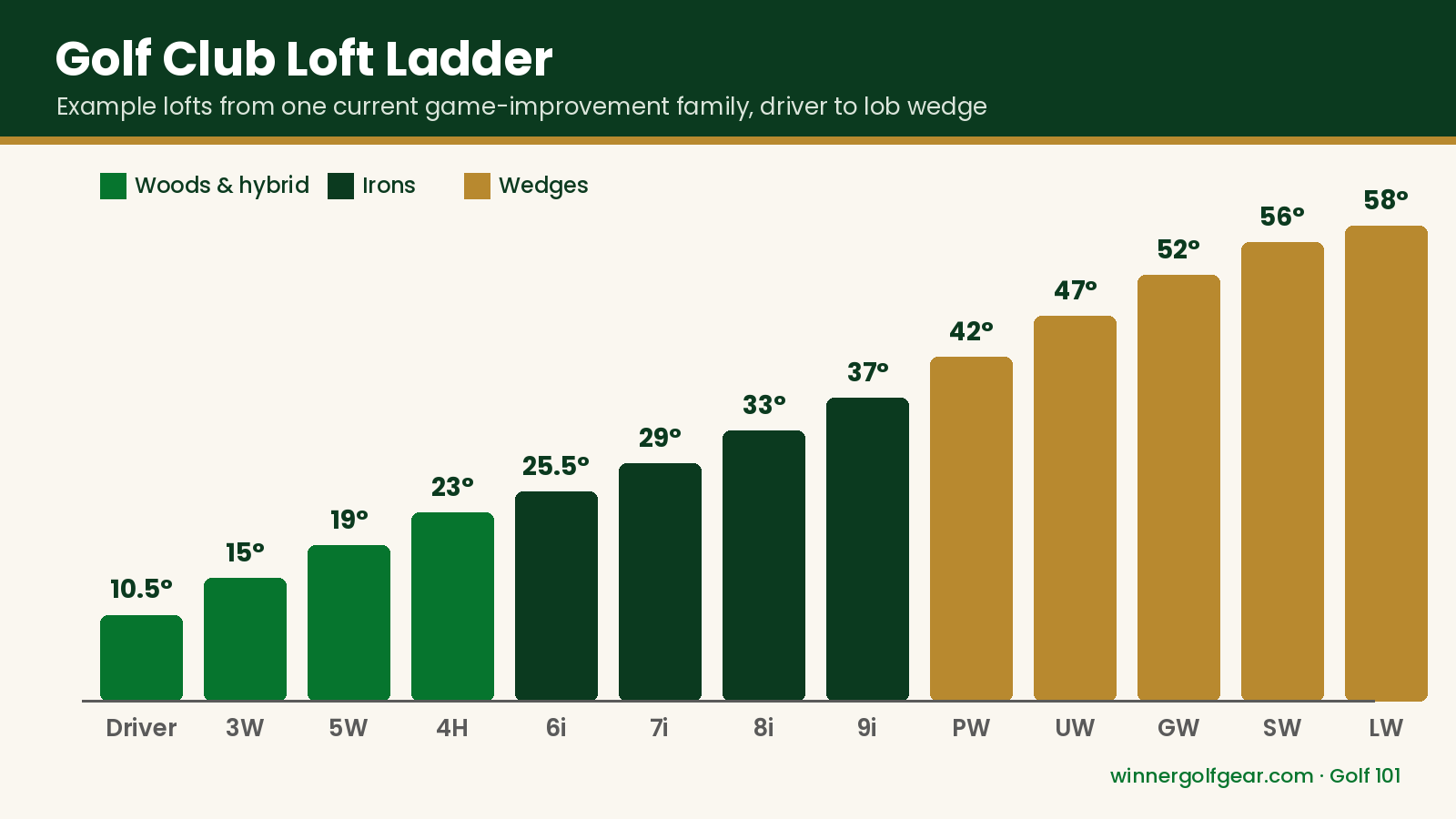
Golf Club Loft Chart: Every Club from Driver to Wedge
Golf Club Loft Chart: Every Club from Driver to WedgeTypical lofts run from about 9°–12° for a driver, 15°–24° for fairway woods, 17°–34° for hybrids, about 19° (4-iron) to 42° (pitching wedge) for game-improvement irons, and 46° to 58° or more for wedges.
Graphite vs Steel Shafts: What Beginners Should Know
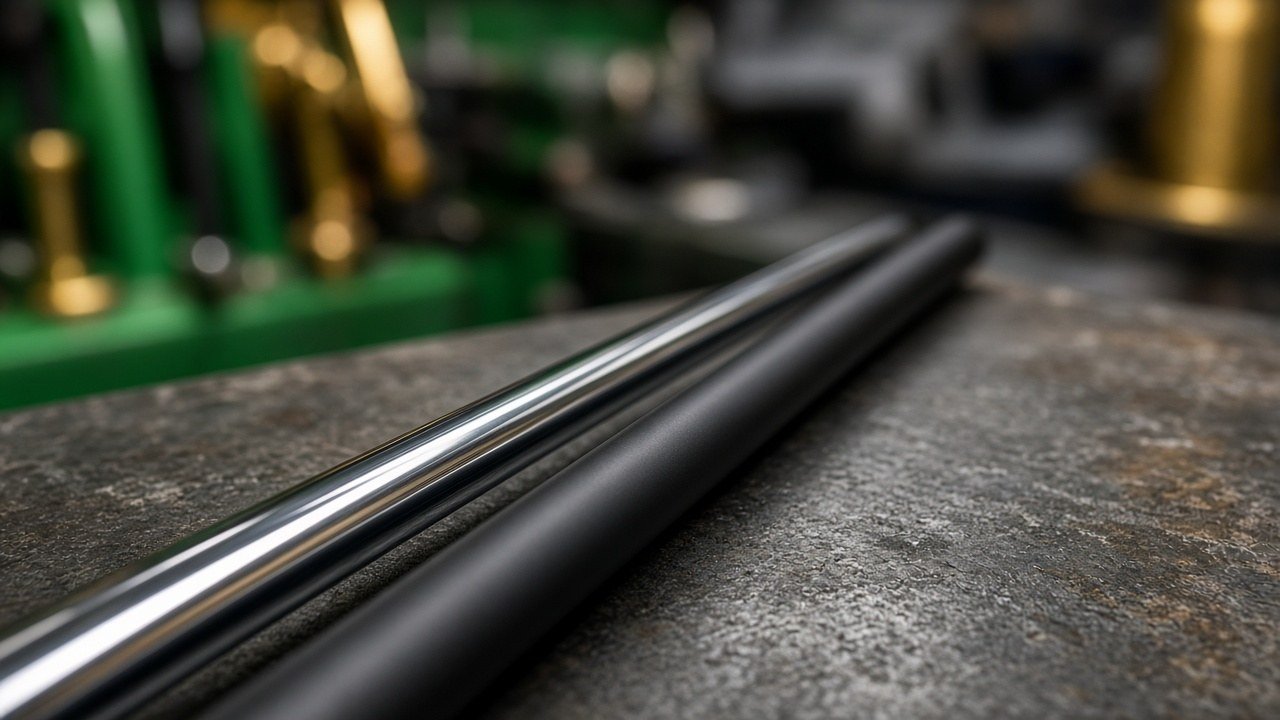
Graphite vs Steel Shafts: What Beginners Should KnowGraphite shafts are lighter, so they help slower swingers make speed and dampen vibration; steel shafts are heavier and usually cost less, which some golfers find easier to control.
Golf Ball Compression Explained (and How Much It Matters)
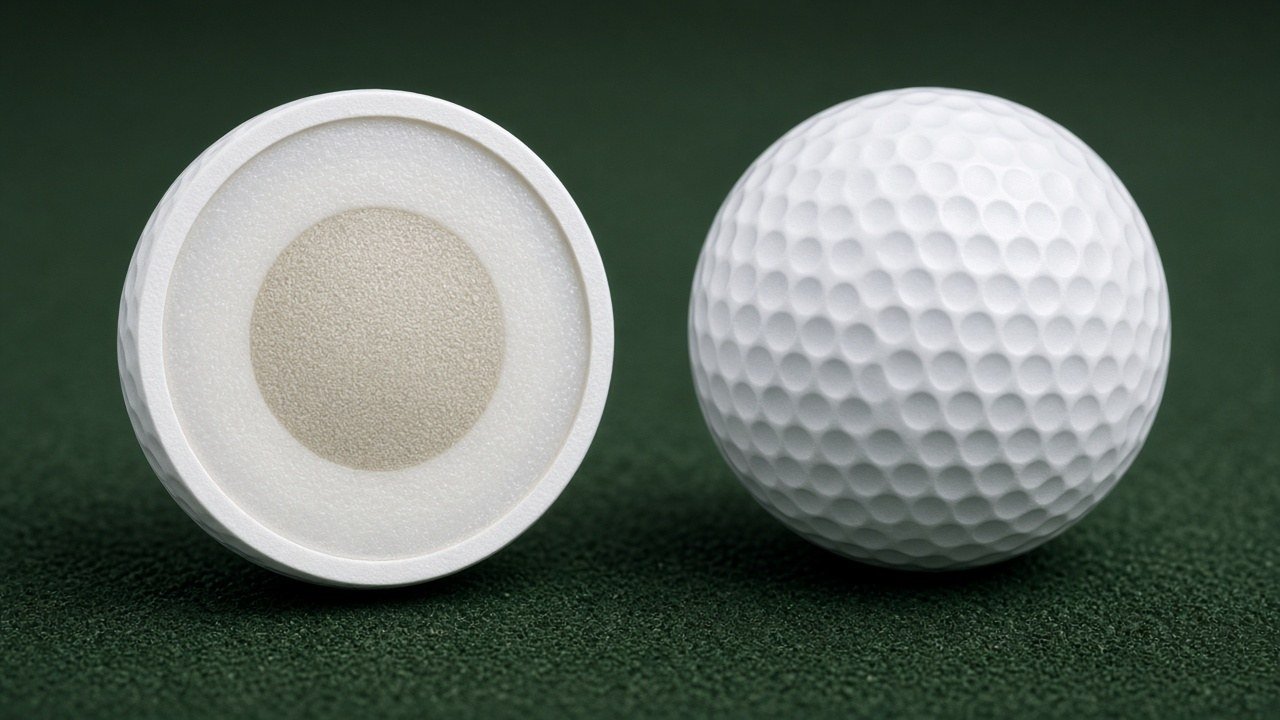
Golf Ball Compression Explained (and How Much It Matters)Compression is how much a golf ball deforms under load: low-compression balls feel softer, high-compression balls feel firmer.
Golf Wedges Explained: Loft, Bounce and Which Ones to Carry
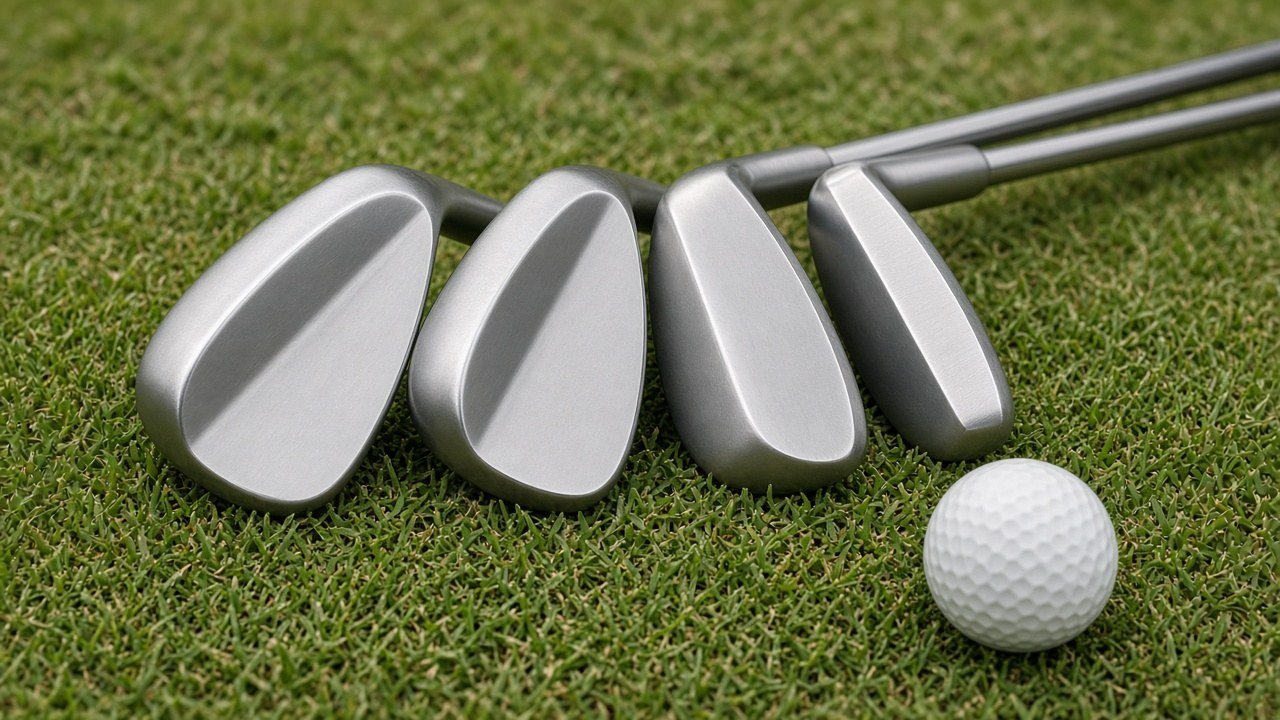
Golf Wedges Explained: Loft, Bounce and Which Ones to CarryThe four wedges are the pitching wedge (about 42°–46°), gap wedge (about 48°–52°), sand wedge (about 54°–56°) and lob wedge (about 58°–60°).
Hybrid vs Iron: When to Swap Your Long Irons
Hybrid vs Iron: When to Swap Your Long IronsAt the same loft, a hybrid is usually easier to launch and more forgiving than an iron because its weight sits lower and deeper in a wider head, and it is slightly longer.
How to Choose a Putter: A Beginner's Fitting Checklist
How to Choose a Putter: A Beginner's Fitting ChecklistChoose a putter in this order: length (eyes roughly over the ball, arms hanging naturally), head shape (mallets are more forgiving, blades give more feel), then balance (face-balanced for straighter strokes, toe hang for strokes with more arc).
New vs Used Golf Clubs: A Beginner's Buying Guide
New vs Used Golf Clubs: A Beginner's Buying GuideBuying used is usually the smartest way for a beginner to start: irons, fairway woods, hybrids and drivers from the last few model years lose value quickly but play almost the same.
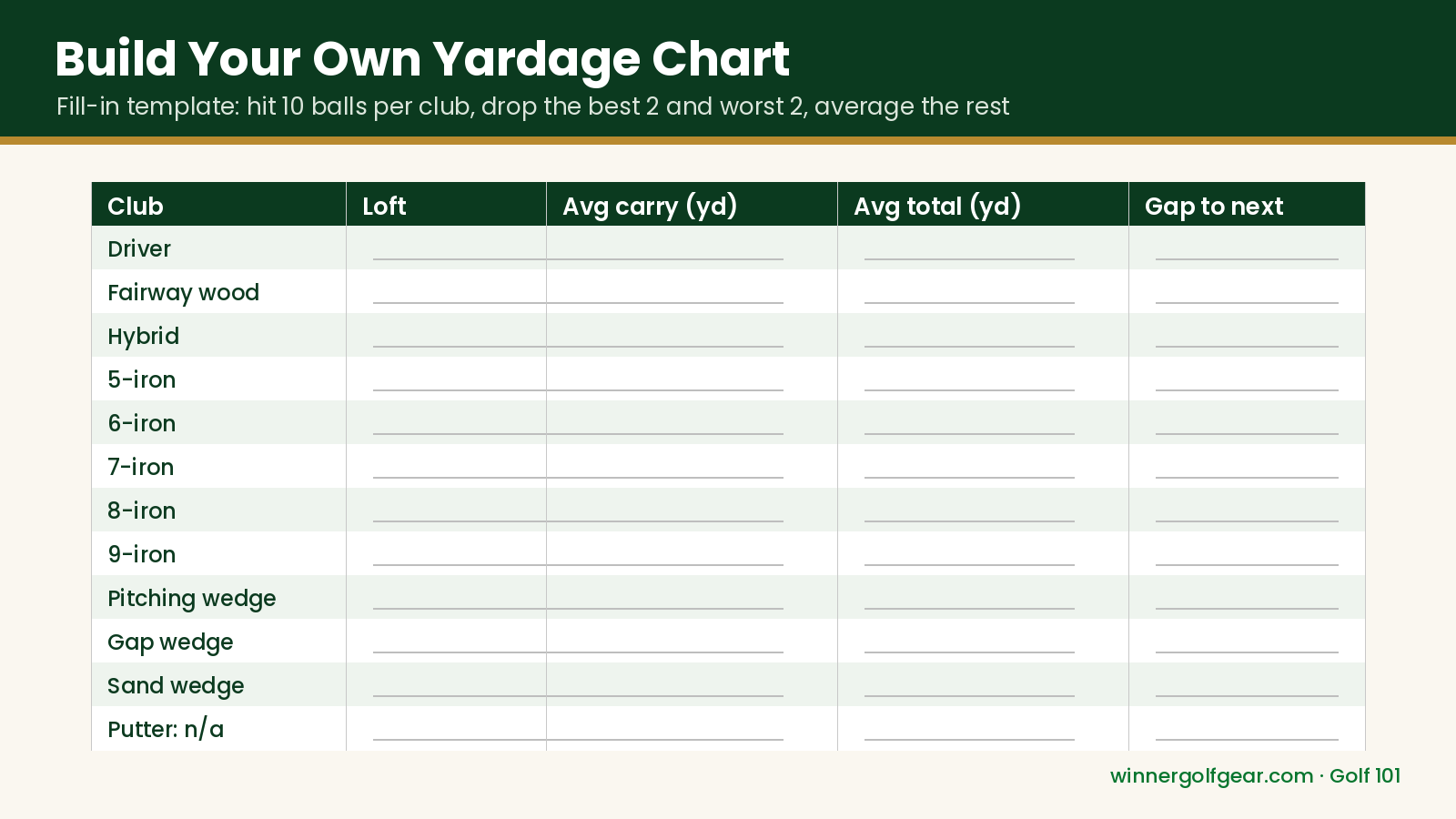
How to Build Your Own Golf Club Yardage Chart
How to Build Your Own Golf Club Yardage ChartA generic "average distance per club" chart tells you little, because distance depends on swing speed, strike and the lofts in your set, which differ by several degrees between models.
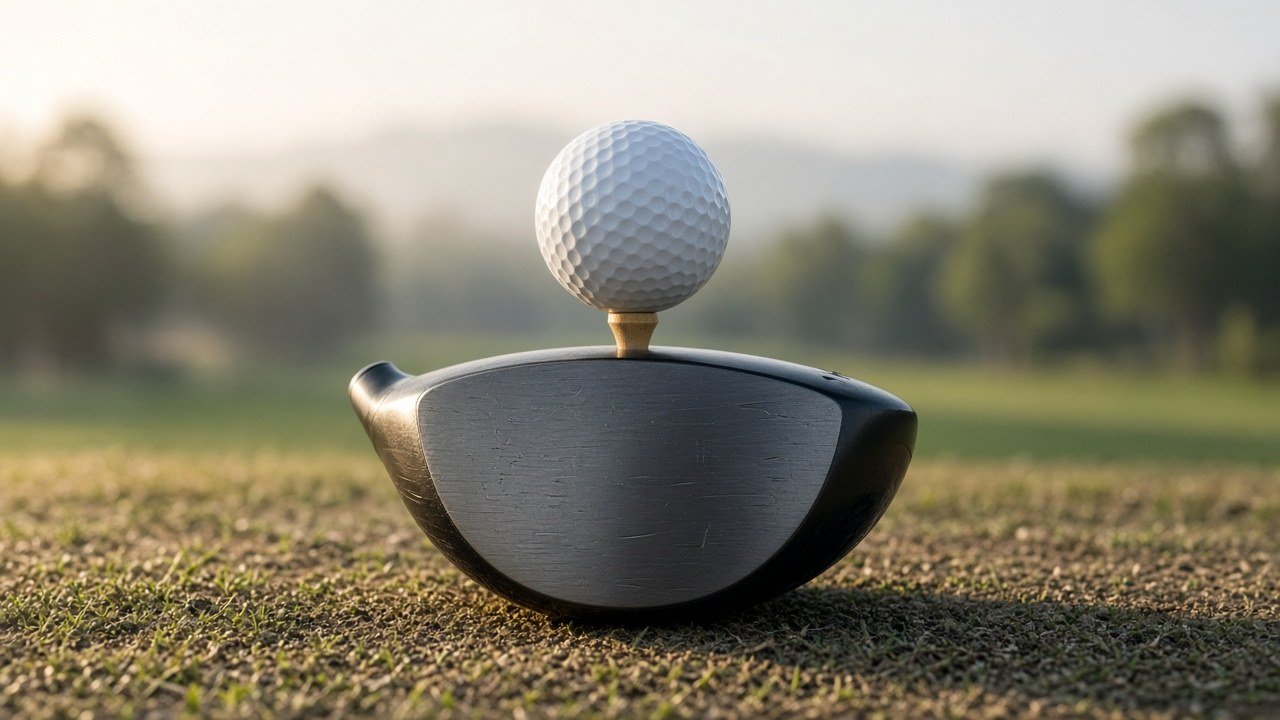
How High Should You Tee a Golf Ball? Tee Height by Club
How High Should You Tee a Golf Ball? Tee Height by ClubFor a driver, tee the ball so about half of it sits above the top edge of the clubface at address.
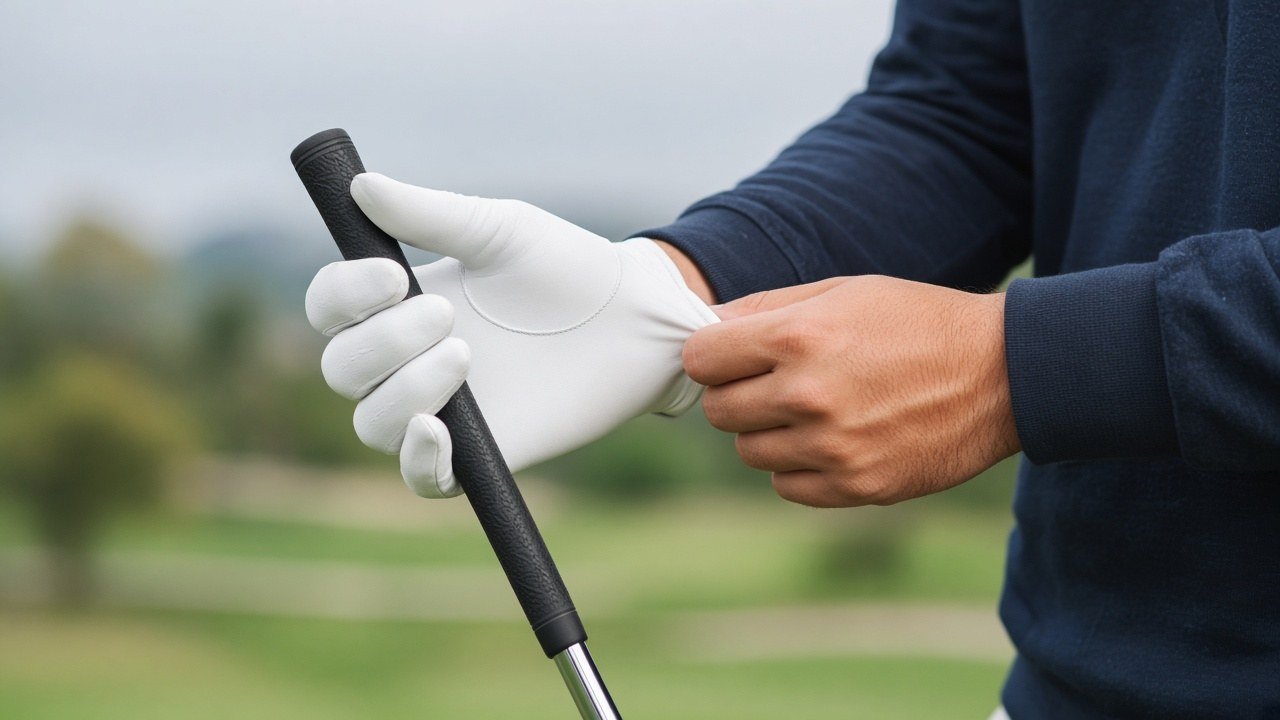
Which Hand Does a Golf Glove Go On?
Which Hand Does a Golf Glove Go On?A golf glove goes on your lead hand: the left hand for a right-handed golfer and the right hand for a left-handed golfer.
What to Wear Golfing: A Beginner's Dress Code Guide
What to Wear Golfing: A Beginner's Dress Code GuideFor most courses: a collared shirt or golf top, tailored trousers, chino shorts or a golf skirt, and golf shoes or clean trainers with soft soles.

Skills basics

Course basics
Frequently asked questions

What should a beginner golfer learn first?

The basic rules, etiquette and how to keep score, so you can play safely and at a good pace. Then the grip, stance and short game.

How many clubs does a beginner need?

Seven to ten is plenty: a driver or fairway wood, a hybrid, a few irons, a pitching wedge, a sand wedge and a putter. The Rules allow up to 14.

Which edition of the rules do these guides follow?

The current Rules of Golf, the 2023 edition, which stays in force until 1 January 2028. Each guide names the rule number so you can look it up on the course.

How this guide was put together (method note): We picked the 30 topics from the questions new golfers ask most and mapped each one to the official rule or manufacturer spec that answers it. Last checked 12 November 2026. We did not run a hands-on test for this page. Read how we research and test for our standards.

Related posts