
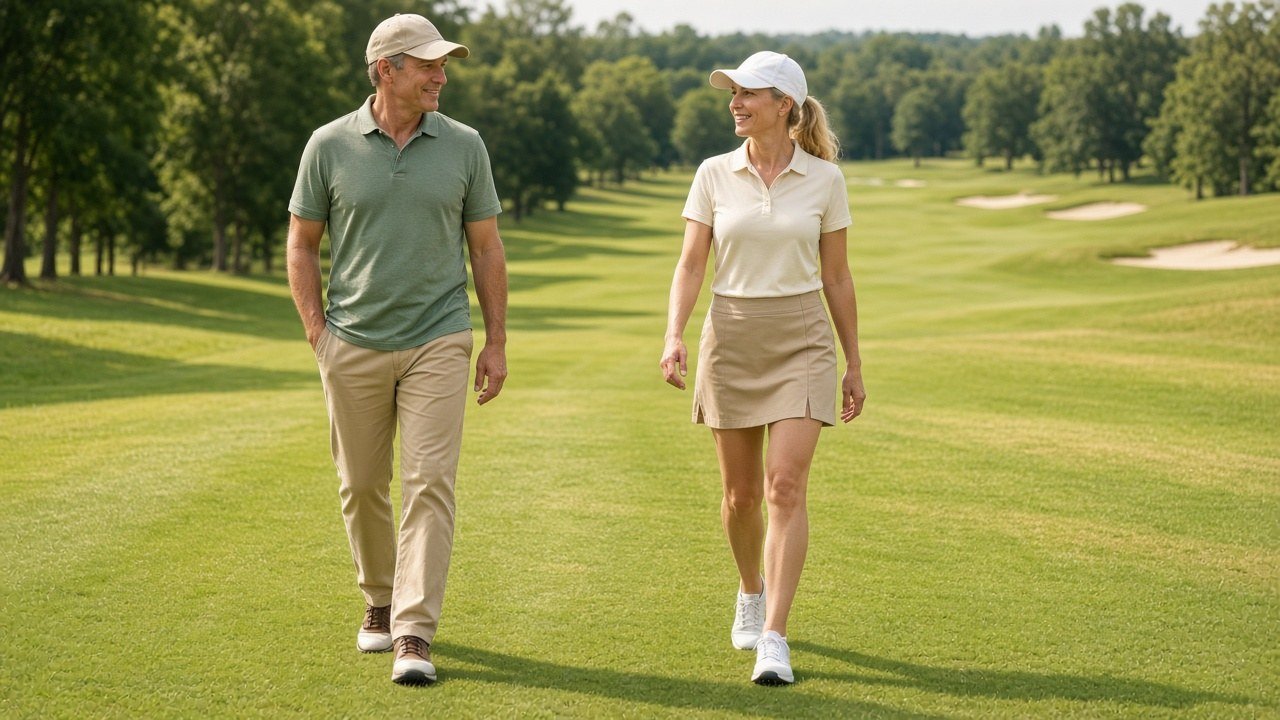
Dress codes are set by the course
Takeaway: There is no universal golf dress code; the course's own policy is what counts.
The Rules of Golf cover play and equipment, not clothing. Dress codes are a course policy, and they range from relaxed (municipal courses, driving ranges, par-3 courses) to strict (many private members' clubs). If you are a guest, ask your host; if you are booking a public course, check its website. When in doubt, the safest outfit is the "smart casual golf" column below.
Course type and what to expect
| Where | Typical expectation | Safe outfit |
|---|---|---|
| Driving range, simulator, par-3 or pitch-and-putt | Relaxed | Any clean athletic or casual clothes, trainers |
| Public / municipal course | Usually light rules; some ban denim and vests | Polo or golf top, shorts or trousers, golf shoes or trainers |
| Resort course | Moderate; collared tops common | Polo, tailored shorts or trousers, golf shoes |
| Private members' club | Strictest: collared shirts, tucked in, no denim, golf shoes, sometimes rules on hats indoors and in the clubhouse | Collared shirt tucked in, belt, tailored trousers or golf skirt, golf shoes |
The first-round outfit checklist
- Collared polo or golf top (women: collarless golf tops are widely accepted, but check private clubs)
- Tailored trousers, chino or golf shorts, or a golf skirt/skort
- Belt, if your trousers have loops
- Golf shoes with soft spikes or spikeless soles, or clean trainers at relaxed courses
- Cap or visor and sunscreen
- A light waterproof or windproof layer
- Glove (see which hand a golf glove goes on)
Shoes: the item that matters most
Takeaway: Grip underfoot affects your swing; comfort affects your last six holes.
Golf shoes give traction during the swing and on slopes, and they protect greens. Many courses ban metal spikes, so soft-spiked (plastic cleats) or spikeless shoes are the safe choice. Spikeless shoes double as casual shoes and are popular with beginners; soft spikes grip better on wet grass and hills. If you are curious about what tour players wear, our golf shoes the pros wear page lists models player by player, with FootJoy the most common brand among the players in our index. The Patrick Cantlay and Billy Horschel WITB pages go further into individual shoe choices.
Dressing for weather
| Conditions | Add | Why |
|---|---|---|
| Hot and sunny | Light, breathable fabrics; wide-brim hat or cap; sunglasses; sunscreen | Four-plus hours outside |
| Cool morning, warm afternoon | Thin quarter-zip or vest you can remove | Layers you can carry in the bag |
| Cold | Base layer, mid layer, thin windproof, winter gloves (pair), beanie | Bulky jackets restrict your turn |
| Rain | Waterproof jacket and trousers, rain gloves, umbrella, towel | Dry grips matter more than dry clothes |
What to avoid
- Denim (banned at many courses)
- Gym shorts, swim shorts and very short shorts
- Vests/tank tops and band T-shirts at stricter clubs
- Metal spikes unless the course allows them
- Tracksuit bottoms at private clubs
- Very loose, long sleeves or jackets that catch on the swing
Women's golf clothing notes
Women's dress codes are often a little more flexible on collars: many courses accept collarless or mock-neck golf tops. Skirts and skorts usually need to be of "golf length", which some clubs define and many do not; tailored shorts and trousers are always acceptable. As with men's codes, private clubs can be stricter, so check before a first visit.
What to pack in your bag besides clothes
- Spare glove, especially on hot or wet days
- Towel clipped to the bag for grips and clubfaces
- Sunscreen and a refillable water bottle
- Ball marker and pitch-mark repair tool (expected course care)
- Spare socks if the course is often wet in the morning
- A light snack for the turn after nine holes
- Your yardage card (see build your yardage chart)
Keeping these in the same pocket of your bag each round means you will not hold up the group searching for them on the first tee.
Budget tips
Takeaway: You don't need branded golf clothes for your first rounds.
Plain polos and chinos you already own work almost everywhere. If you are going to buy one item, make it shoes, then a waterproof layer. Our golf accessories guide shows what else is worth having in the bag.
Common beginner mistakes
- Not checking the dress code before a private-club invitation.
- Wearing brand-new stiff shoes on a walking round. Break them in first.
- Bulky jackets that stop you turning; layer thin instead.
- Forgetting the clubhouse rules, such as caps off indoors at some clubs.
- No rain plan. A towel and spare glove keep grips dry.
Dress is part of etiquette at many clubs; the rest is covered in golf etiquette for beginners.
Frequently asked questions
What should I wear golfing for the first time?
A collared shirt or golf top, tailored trousers or shorts (or a golf skirt), and golf shoes or clean trainers. Check the course's dress code.
Can you wear jeans golfing?
Many courses ban denim, especially private clubs. Public courses and ranges are more relaxed; check before you go.
Do you need golf shoes to play golf?
Not always. Many public courses accept clean trainers, but golf shoes give better grip during the swing.
Are metal spikes allowed on golf courses?
Many courses ban them. Soft-spiked or spikeless golf shoes are the safe choice.
Do you have to tuck in your golf shirt?
At many private clubs, yes. At most public courses it is optional.