
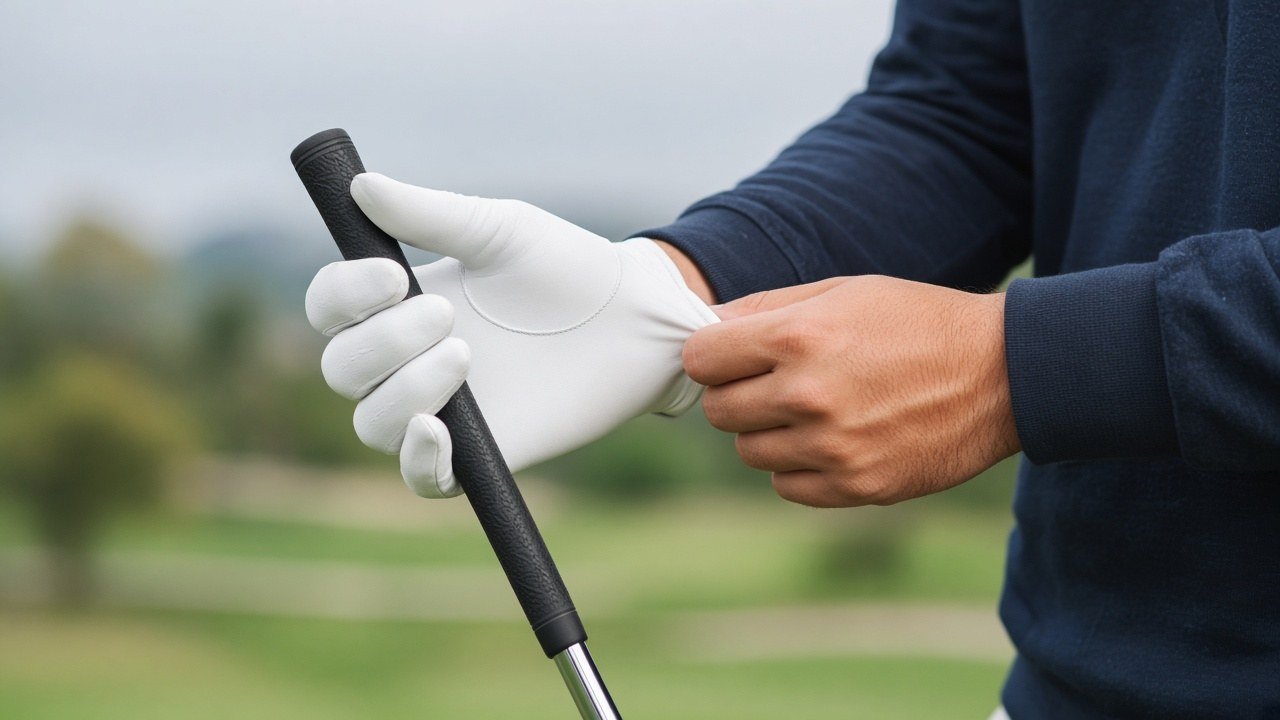
Lead hand, explained
Takeaway: Wear the glove on the hand that is higher on the club.
| You swing… | Lead hand (top of grip) | Glove goes on |
|---|---|---|
| Right-handed (ball goes left to right of your body toward the target on your left) | Left | Left hand |
| Left-handed | Right | Right hand |
A quick way to remember: the glove goes on the hand nearest the target at address. When buying, glove packs are labelled by the hand they fit ("LH" for left hand) or by the golfer ("for right-handed golfer"), so check which convention the label uses.
Why only one glove?
The lead hand holds the club mostly with the fingers and last three fingers, and it is the hand most likely to slip or blister. The trail hand often wraps over or links with the lead hand (see how to grip a golf club) and many players like bare-skin feel there. Two gloves are common in cold or wet weather, and some golfers with sensitive skin wear two all the time. There is no rule against it.
Do you need a glove at all?
Takeaway: A glove is optional; it is worth it for most beginners because it protects the hands while you practise a lot.
| Wear one if… | Skip it if… |
|---|---|
| You get blisters or calluses at the range | You have a firm grip and like the feel of bare hands |
| Your hands sweat or it is humid or wet | It is cool and dry and your grips are fresh |
| Your grips are a little worn | You are putting (most golfers take it off) |
How a golf glove should fit
- Snug across the palm with no loose material when you make a fist
- Fingertips reach the end of the glove fingers without bunching
- The closure tab overlaps comfortably, not at its limit
- Leather gloves feel tight at first and stretch slightly; synthetic gloves stretch less
- Try "cadet" sizes if your fingers are short for your palm width
Leather, synthetic or all-weather
| Type | Feel | Durability | Best for |
|---|---|---|---|
| Cabretta leather | Thin, soft, tacky | Lower; wears faster | Feel-focused players, dry days |
| Synthetic | Slightly thicker | Higher; machine-washable versions exist | Range sessions, beginners |
| Hybrid (leather palm, synthetic back) | Balanced | Medium | All-round use |
| Rain gloves (pair) | Grippy when wet | Medium | Wet rounds |
What the rules say about gloves
The Equipment Rules allow plain gloves. A glove may not include features that give an unfair advantage, such as padding or webbing designed to help you hold the club, beyond what a normal glove provides. Fingerless or "half" gloves sold for golf are generally fine if they meet the same standard.
What tour players wear
Takeaway: Almost every tour player wears a glove on the lead hand for full shots and removes it to putt.
Our player pages list the glove where a recent report named one. For example, the Patrick Cantlay WITB page notes a Titleist glove (Golf Monthly 2026), with the model last named in 2022. Glove reports date quickly, which is why we show the date next to each one. Shoes are tracked the same way on our golf shoes pros wear page, and both appear on individual WITB pages.
Measuring for size
Takeaway: Measure your lead hand, then use that brand's own chart: sizes are not standard across makers.
Most glove makers size by hand circumference (measured around the palm just below the knuckles, excluding the thumb) and hand length (from the wrist crease to the tip of the middle finger). Write both numbers down and compare them with the size chart on the maker's site, because one brand's Medium can fit like another's Large. If you fall between sizes, leather gloves usually suit the smaller size because they give a little with wear, while synthetic gloves suit the larger. Cadet sizes are made for wider palms with shorter fingers, and many golfers who think gloves always feel "baggy at the fingertips" are in fact cadet sizes.
Players with arthritis or weaker hands often prefer a slightly thicker synthetic glove combined with larger grips, which together reduce how hard they have to squeeze. Juniors should buy junior sizes rather than small adult gloves, as the finger proportions differ.
Making a glove last
- Take it off between shots on hot days and let it dry flat.
- Keep it in its original packet or flat in the bag, not balled up.
- Rotate two gloves on long practice days.
- Replace it when the palm turns shiny or holes appear; a worn glove grips worse than bare hands.
A glove is one of the cheapest items in the bag. Our golf accessories guide lists the other small items worth having from day one.
Common beginner mistakes
- Wearing it on the wrong hand. Lead hand only.
- Buying a size too big. Loose material folds and causes the slipping you are trying to stop.
- Squeezing harder because of the glove. A glove should let you hold the club lighter, not tighter.
- Putting with a stiff, worn glove if you prefer feel; most golfers putt bare-handed.
- Ignoring blisters. Repeated blisters in one spot usually point to a grip problem, not just a glove problem.
Frequently asked questions
Which hand does a golf glove go on for a right-handed golfer?
The left hand, because it is the lead hand at the top of the grip.
Which hand does a left-handed golfer wear a glove on?
The right hand.
Do you need to wear a golf glove?
No. Gloves are optional, but many beginners wear one to prevent blisters and improve grip.
Should you wear a golf glove when putting?
Most golfers take it off for putting to get more feel, but there is no rule either way.
Can you wear two golf gloves?
Yes. Many golfers wear two in cold or wet weather, and it is allowed.